
Blogs
Filter by...
-
More than the sum of our parts: a strategy for the EDRi Network
It took over a year. From an EDRi members’ survey in early 2019 to the vote by the (online) General Assembly of members at the end of April 2020. In those months we held workshops, webinars, calls, several rounds of comments, draft iterations and about 50 consultations.
Read more
-

German Constitutional Court stops mass surveillance abroad
The German Federal Intelligence Service (BND) has so far been able to spy on foreign citizens abroad en masse and without cause—even on sensitive groups such as journalists.
Read more
-
Member in the Spotlight: D3 – Defesa dos Direitos Digitais
D3 is a volunteer-run association dedicated to the defense of fundamental rights in the digital context. Its focus is to ensure autonomy and freedom of choice; uphold privacy and free access to information, knowledge and culture; and defend digital rights as a reinforcement to the principles of a democratic society.
Read more
-
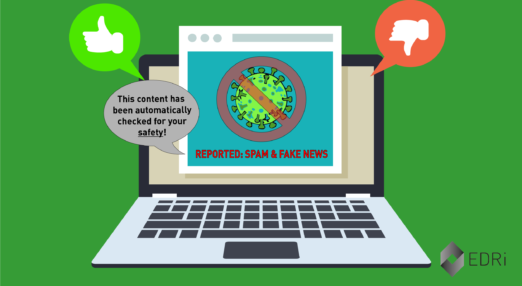
COVID-Tech: COVID infodemic and the lure of censorship
In EDRi's series on COVID-19, COVIDTech, we will explore the critical principles for protecting fundamental rights while curtailing the spread of the virus, as outlined in the EDRi network's statement on the virus.
Read more
-

Ban biometric mass surveillance!
44 civil society organisations call for a ban on biometric mass surveillance in EDRi's new paper, "Ban Biometric Mass Surveillance: A set of fundamental rights demands for the European Commission and EU Member States"
Read more
-

Xnet issues two complaints to improve data protection in Spain
Xnet highlights gaps in Spain’s adaptation of the EU General Data Protection Regulation (GDPR). The Spanish member of EDRi has opened two complaints to the European Commission related to the lack of effective adaptation of the data minimisation principle and the lack of conciliation between personal data protection and freedom of expression and information in the Spanish legislation.
Read more
-

Google: seizing a crisis to legitimise mass surveillance?
Even in times of Corona, Google follows you wherever you go. The company collects and processes all our location data en masse and can thus graph how well we adhere to the imposed measures.
Read more
-

Austria’s biggest privacy scandal: residential addresses made public
Nobody took data protection into account for the so-called “Supplementary Register for Other Concerned Parties” (Ergänzungsregister für sonstige Betroffene). The Ministry for the Economy and the Finance Ministry are responsible for a data breach to which the Austrian Economic Chambers were an accomplice.
Read more
-

Why COVID-19 is a Crisis for Digital Rights
The COVID-19 pandemic has triggered an equally urgent digital rights crisis. New measures being hurried in to curb the spread of the virus, from “biosurveillance” and online tracking to censorship, are potentially as world-changing as the disease itself.
Read more
-
Member in the Spotlight: Homo Digitalis
Homo Digitalis is the only digital rights civil society organization in Greece. Its goal is to protect of human rights and freedoms in the digital age by influencing legislators & policy makers on a national level, and raising awareness amongst the people of Greece regarding digital rights issues.
Read more
-
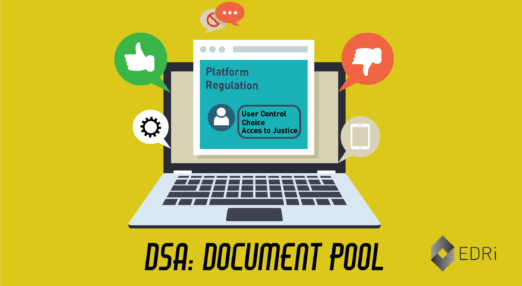
Everything you need to know about the DSA
We have created a document pool in which we will be listing relevant articles and documents related to the DSA. This will allow you to follow the developments of content moderation and regulatory actions in Europe.
Read more
-

#WhoReallyTargetsYou: DSA and political microtargeting
Europe is about to overhaul its 20-year-old e-Commerce Directive and it is a once-in-a-decade chance to correct the power imbalance between platforms and users. As part of this update, the Digital Services Act (DSA) must address the issue of political microtargeting (PMT).
Read more