
Our work
EDRi is the biggest European network defending rights and freedoms online. We work to to challenge private and state actors who abuse their power to control or manipulate the public. We do so by advocating for robust and enforced laws, informing and mobilising people, promoting a healthy and accountable technology market, and building a movement of organisations and individuals committed to digital rights and freedoms in a connected world.
Filter resources
-

Civil society urges EU institutions to stop the “censorship machine” in the copyright proposal
EDRi has signed a joint open letter together with 27 other civil society organisations expressing concerns about European Commission’s copyright proposal. The proposal requires internet platforms to use automated upload filtering technologies. This obligation would impact negatively on free speech and democracy by building a system where citizens will face internet platforms blocking the upload of […]
Read more
-

#NetCompetition wants an improved Electronic Communications Code
Today, on 13 March 2017, #NetCompetition, an alliance of consumer organisations, service providers and network operators, digital rights organisations and online content providers, adopted its position paper on the European Commission’s proposal for a European Electronic Communications Code. Despite some general positive aspects, we have concluded that the proposed Directive to establish a European Electronic Communications […]
Read more
-
Copyright Directive: Lead MEP partly deletes the “censorship machine”
Note: We have updated this article on 20 March 2017 eliminating mentions to the leak when it was no longer necessary and updating the number of amendments below. The rest of the analysis remains relevant and has not been modified. On 8 March, we were able to gain an insight into a leaked Draft Report […]
Read more
-

New e-Privacy rules need improvements to help build trust
On 10 January 2017, the European Commission published its long-awaited proposal for an e-Privacy Regulation (ePR) to replace the 2002 e-Privacy Directive (ePD). This new regulation complements the General Data Protection Regulation (GDPR), adding more clarity and legal certainty for individuals and businesses – helping to protect our personal data by providing specific rules related […]
Read more
-

Is Telefónica offering real transparency and control?
Our data is extremely precious for technology companies. Internet and telecommunications services host and process huge amounts of personal data of their clients, based on often vague and confusing terms of service. The clients are rarely properly informed on what their data are being used for. On 27 February, at the Mobile World Congress (MWC), […]
Read more
-
The tale of the fight for transparency in the EU Internet Forum
Chapter One: The dark knights at a secret meeting It was the beginning of the year 2014 when the European Commission first announced the creation of an “EU Internet Forum”. But it would take almost two years and several meetings before its official launch on 3 December 2015. The Forum’s mission: to “counter terrorist content […]
Read more
-
Audiovisual Media Services Directive – is it good enough to be a law?
The worst examples of bigotry, ignorance, and hatred have appeared more visible in our public discourse in recent months and years. All reasonable people are appalled at willful ignorance and almost visceral hate. We need to take the necessary steps to fight ignorance and hatred. But we need to do so in a way that […]
Read more
-

German intelligence agency violates freedom of the press
EDRi observer Reporters Without Borders Germany is appalled by the apparently targeted surveillance of foreign journalists by the Bundesnachrichtendienst (BND), Germany’s foreign intelligence agency. As reported by the Spiegel, the BND spied on at least 50 telephone numbers, fax numbers and email addresses belonging to journalists or newsrooms around the world in the years following 1999. […]
Read more
-
People with disabilities do not want just any Accessibility Act
On 6 March 2017, the European Disability Forum (EDF), the umbrella organisation representing persons with disabilities at EU level, joined forces with its members and other civil society organisations to protest in front of the European Parliament in Brussels. Over a hundred people gathered together calling for a meaningful European Accessibility Act (EAA), to guarantee better […]
Read more
-
Danish Defence Intelligence Service will get access to PNR data
Denmark does not take part in the EU Passenger Name Record (PNR) Directive since Denmark has an opt-out from the Justice and Home Affairs (JHA) area of the European Union. Instead, Denmark has a national PNR system which has been developed gradually on the legislative side since 2006. The practical implementation by Danish authorities has […]
Read more
-
Denmark: Our data retention law is illegal, but we keep it for now
On 2 March 2017, the Danish Minister of Justice appeared before the Legal Affairs Committee of the Danish Parliament to answer questions about the implications of the Tele2 data retention ruling (joined cases C-203/15 and C-698/15) from the Court of Justice of the European Union (CJEU). In his statement to the committee, the Minister started […]
Read more
-
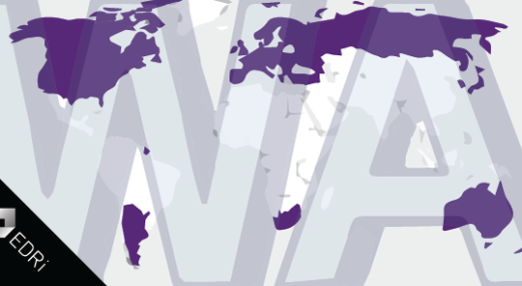
Rights groups demand action on export controls
Nine civil society organisations, including EDRi and several EDRi members, have signed a letter to the participants of the Wassenaar Arrangement, a multilateral export control regime with 41 participating states. We joined Privacy International’s efforts, in expressing concerns that “elements of the current control list of technologies and proposed new additions will have adverse effects […]
Read more