
EDRi-gram, 8 October 2026
What has the EDRi network been up to over the past few weeks? Find out the latest digital rights news in our regular newsletter. In this edition: Turning up the heat – Commission backs social media bans, Apple held accountable, summer to-dos, & more!
Do you want to receive all the latest news from the digital rights world?
SUBSCRIBE NOW TO THE EDRi-GRAM!
Dear supporters,
This EDRi-gram edition includes a real snapshot of the disconnect between the kind of technology and protections people and communities around the world need, and the kind that are being pushed at us by lawmakers and companies either for the sake of profits, as easy fixes to structural societal issues or more sinister reasons.
Take the EU’s recently announced KIDS ACT. We unpack the many shortcomings of the proposal which is a missed opportunity to address the root cause of why online platforms are harmful to children – and everyone else. We also look at the Cloud and AI Development (CADA) Act, a part of the EU’s Tech Sovereignty Package announced earlier this year. What was sold as a way to jumpstart the EU’s “sovereign AI” ambitions seems to be set to hurt digital rights and environmental protections instead, while also imposing an unreliable technology onto us.
Elsewhere, Austria will soon get to find out what happens when AI systems are allowed to issue legally binding government decisions without any human oversight. EDRi-member epicenter.works detail the draft proposal and all the ways it could backfire.
None of the above is without resistance from those of us working to protect your rights. Dutch EDRi-member Bits of Freedom have launched a new campaign demanding a ban on Meta’s “pervert glasses”, aka, AI glasses which can be used to film people without them knowing. Meta was clearly paying attention – their viral satirical video on these glasses was removed from Instagram.
From critical campaigns, and urging EU countries to not treat data protection and “competitiveness” as opposing goals as they discuss the Digital Omnibus, to legal action against Big Tech corporations preying on our minds – we’re fighting back.
Next week, at our flagship annual event #PrivacyCamp26, we’ll be asking the real questions – where does technology come from? Who shapes it? And what would self-determination look like if it were defined by the people, not dictated by profits or a state’s agenda? We hope to see some of you attending!
-
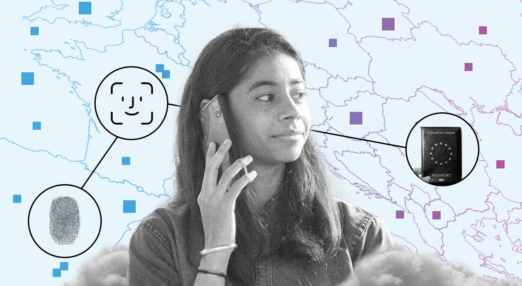
Your data, their decision: the hidden surveillance infrastructure behind Europe’s digital borders
A new report by ARTICLE 19 examines how the European Union is presiding over the most significant expansion of border surveillance in its history. Much of this development...
-

No human required: Austria’s plan for AI-only government decisions
A sweeping change to Austria's administrative law would let authorities issue binding decisions using AI systems with no human ever reviewing the outcome. EDRi member epicenter.works has sent...
-

Simplification for whom? Open letter to EU Member States to uphold GDPR protections in Digital Omnibus on Data
Over the past months, the European Commission's Digital Omnibus on Data has turned into a wider discussion about how much protection the data – and with it, the...
-

D3 brings class actions on addictive design against Facebook, Instagram, TikTok and YouTube
The Portuguese digital rights organisation and EDRi member D3 announces that it has brought four class actions lawsuits against Facebook, Instagram, TikTok and YouTube over the use of...
-

The KIDS Act will make the internet less safe
On 16 September, the European Commission presented the KIDS ACT, its plan for making online experiences safer for young people. Far from being a move to lead the...
-

The Cloud and AI Development Act (CADA) represents everything that’s wrong with Europe’s approach to digital sovereignty
The EU’s Tech Sovereignty Package is supposed to jump-start Europe’s “sovereign AI” ambitions. But due to fundamental misunderstandings about the technology behind ‘AI’ and the blind trust...
Donations from readers like you help us to publish the EDRi-gram and bring you the most important digital rights news.
DONATE TODAY
RECOMMENDED
[📰 read] Inside the secretive cyberweapons company that won over Israel’s intelligence elite by IrpiMedia. Led by Rosita Rijtano, this investigation reveals the key role Israel played in the rise of Dataflow Security, an Italian company that develops code to break into computers and smartphones.
[📰 read] The environmental impact of AI – A poorly regulated tipping point in the EU by CDT Europe. As the EU pushes ahead with a massive data centre buildout, this analysis shows how the AI Act and other existing laws largely sidestep AI’s energy, water and material footprint. It also argues that the proposed Cloud and AI Development Act weakens environmental protection, by fast-tracking permits and limiting public participation and legal recourse.
[🏃🏿 do] Call for proposals: legal analysis on access to personal data by migration enforcement authorities by PICUM. The Platform for International Cooperation on Undocumented Migrants is seeking a legal expert to examine how the new EU Return Regulation, and recent laws in Sweden and Finland, turn healthcare, education and social services into tools of migration enforcement.
[🏃🏿 do] Explore 6 websites that remind us why we love the internet by Superrr lab. A playful antidote to doom-scrolling, this list gathers six websites that show the web at its most joyful and subversive. It ranges from Internet History Roulette, a spinning wheel of early-web nostalgia, to Queering the Map, a living archive of queer life.
[🎧listen] The AI buildout is a boon for the fossil fuel industry by Tech Won’t Save Us. Host Paris Marx talks to climate writer and data analyst Ketan Joshi about how Big Tech is teaming up with the fossil fuel industry to push unnecessary data centre projects while misrepresenting their climate impact, with governments letting it happen.
EVENTS
-

Conference Digital Commons: Infrastructures, Design, and the Ethics of Autonomy
Digital Commons: Infrastructures, Design, and the Ethics of Autonomy is an international conference exploring how digital infrastructures shape contemporary life, and how communities, researchers, and technologists imagine and...
-

re:publica x New Fall Festival
On 9 and 10 October 2026, re:publica x New Fall Festival will transform the NRW-Forum and the Ehrenhof in Düsseldorf into a place for exchange about the digital...
-
Freedom Not Fear 2026
Freedom not Fear (fnf) is an annual self-organised conference on privacy and digital rights. People from all across Europe meet and work towards more freedom in the digitalised...
-

Brussels Privacy Symposium 2026
Marking its 10th anniversary edition, the Brussels Privacy Symposium celebrates a decade of examining, unpacking, and driving substantive data protection scholarship and thought leadership.
-

IGF 2026 – Internet Governance Forum
The 21st annual meeting of the Internet Governance Forum will be held in Nairobi, Kenya, marking the first gathering of the global multistakeholder community since the UN...
-
40th Chaos Communication Congress (40C3)
Between Christmas and New Year's Eve, the Chaos Computer Club hosts its annual Chaos Communication Congress, a Europe-wide renowned gathering attracting more than 17,000 participants annually.
-

Digital Rights and Equality Symposium
Oxfam Ireland is hosting the Digital Rights and Equality Symposium on 21 October 2026 at O’Reilly Hall, University College Dublin. This all-day event will bring together policymakers, regulators,...
JOBS
-

7amleh is hiring for Admin and Finance Officer – France
7amleh - The Arab Center for the Advancement of Social Media is a non-profit organization that advocates for Palestinian digital rights. 7amleh’s mission is to create a safe,...
-

The Center for Countering Digital Hate (CCDH) is hiring for for Digital Fundraising and Growth Strategist & Director of Major Gifts, Individual and Family Giving
The Center for Countering Digital Hate (CCDH) is a non-profit organisation dedicated to disrupting the architecture of online hate and misinformation. Through evidence-based research, policy advocacy and strategic...
-

The Sovereign Tech Agency is looking for a Finance & Operations Associate
The Sovereign Tech Agency's mission is to imrpove and maintain foundational digital technologies that enable the creation of software. Examples include libraries for programming languages, package managers, open...
-

Amnesty International is hiring for a Governance Coordinator
Amnesty International is a global movement of more than 10 million people who take injustice personally. They are campaigning for a world where human rights are enjoyed by...
-

Mozilla is hiring for a Senior Software Engineer
Mozilla Foundation is committed to an internet that promotes civil discourse, human dignity, and individual expression. To an internet that catalyzes collaboration among diverse communities working together for...