
Blogs
Filter by...
-

Czech ministry apologizes to journalist for blanket collection of mobile phone data
The Czech Supreme Court has ruled that the legal regulation of blanket collection of electronic communications data (known as data retention) violates European Union law in a "long-term and particularly serious manner." This decision is the result of a multi-year campaign by the organization IuRe. However, the responsible minister has not yet taken steps to end blanket collection.
Read more
-

Europe’s digital sovereignty starts with open source
EDRi submitted a response to the EU’s new open source digital strategy. We argue that free and open source software is not a niche technical choice, but a strategic foundation for Europe’s resilience, competitiveness and democratic autonomy.
Read more
-

US pressure on the Digital Services Act in the Netherlands
On 3 February 2026, the United States House Committee on the Judiciary launched a report in which EDRi member Bits of Freedom and Justice for Prosperity, among others, are called "censorous NGOs". In response, Bits of Freedom and Justice for Prosperity are issuing the following statement.
Read more
-

Ensuring human rights-based, global perspectives in the DSA enforcement: the DSA Human Rights Alliance’s guidelines
The DSA Human Rights Alliance has released 'Principles for a Human Rights-Centred Application of the Digital Services Act: A Global Perspective' to guide the European Commission, national policymakers, and regulators as the DSA moves from legislation to enforcement. The recommendations focus on the cross-border effects of DSA enforcement, empowering diverse groups to enforce users’ rights and providing input during enforcement actions. This will ensure that the law is applied in a way that respects international human rights standards and reflects regional perspectives.
Read more
-

How recommender algorithms threaten election integrity
A study published by EDRi member Asociația pentru Tehnologie și Internet (ApTI) Romania analysed how the recommender algorithms on Facebook, Instagram and TikTok distributed political content, during the 2025 presidential election. The quantitative analysis identified cases in which these social media platforms did not comply with either national electoral laws, nor with EU Regulations, such as the Digital Service Act (DSA).
Read more
-
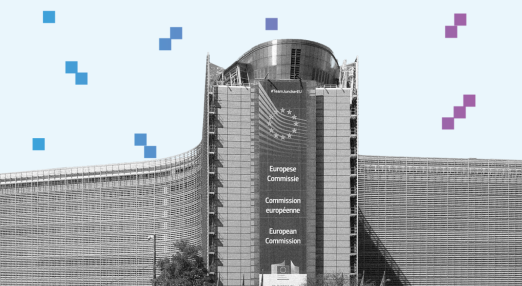
European Commission’s plans will lead to worse regulations
EDRi is deeply concerned that the European Commission’s current plans to amend the Better Regulation framework will lead to worse lawmaking, not better. In its submission to the Commission, EDRi shares recommendations to ensure balanced representation, fairness, transparency, and meaningful safeguards in EU lawmaking.
Read more
-

Reopening GDPR and ePrivacy through the Digital Omnibus: a risky path for EU digital rights
EDRi has assessed the Digital Omnibus proposals affecting the General Data Protection Regulation (GDPR) and the ePrivacy framework. While presented as simplification, the changes amount to deregulation in effect, weakening fundamental rights safeguards, increasing legal uncertainty, and advancing through a process that falls short of democratic lawmaking standards.
Read more
-

EDRi-gram, 4 February 2026
What has the EDRi network been up to over the past few weeks? Find out the latest digital rights news in our bi-weekly newsletter. In this edition: borders, biometrics, billionaires and bots
Read more
-

#DIDit: EDRi members spark movement for alternatives to Big Tech
At the 39th Chaos Communication Congress (39C3), German author Marc-Uwe Kling helped launch the idea of a monthly “Digital Independence Day” with a broad coalition of civil society organisations. On the first Sunday of each month, participants explore alternatives to dominant digital platforms, share experiences using #DIDit, and support one another through volunteer-led online and in-person meet-ups. To date, 189 organisations have joined the initiative, organising over 400 meet-ups.
Read more
-

The EU Commission is gutting net neutrality
The European Commission’s new Digital Networks Act threatens to dismantle nearly a decade of net neutrality protections in Europe. What is being presented as a technical update could actually give politicians control power over the open internet, create paid fast lanes, and weaken independent regulators.
Read more
-

UK adequacy decision: a risk for the future and a lesson to be learnt
As the UK adequacy renewal comes to an end, EDRi member Open Rights Group reflects on its outcome and the broader implications for the future of EU-UK relatiopnships.
Read more
-

EDRi-gram, 21 January 2026
What has the EDRi network been up to over the past few weeks? Find out the latest digital rights news in our bi-weekly newsletter. In this edition: EDRi’s 2025 year in review, new resource to support an EU spyware ban, DSA delayed in Poland, & more!
Read more