
EDRi-gram, 30 April 2026
What has the EDRi network been up to over the past few weeks? Find out the latest digital rights news in our bi-weekly newsletter. In this edition: Young people across Europe say social media bans won’t fix broken platforms
Do you want to receive all the latest news from the digital rights world?
SUBSCRIBE NOW TO THE EDRi-GRAM!
The sun is out in full force in Brussels and the European Commission used it as an opportunity to announce that their ‘age verification’ app is ‘technically ready’. A few hours later, news broke that it was already hacked. Moreover, one of the ways the app verifies a person’s age is through the eID system. The very same system that was hacked in France last week, exposing information of 19 million accounts, which was then advertised for sale on the black market.
Some countries have either implemented social media bans for children (Australia) or intend to do so (France, Spain, and more).
The bottom line is: restrictions and bans on any category of users will force everyone to verify their identity. These bans will not fix broken platforms.
The real problem is platform design and business models. What we need from EU lawmakers is to enforce existing rules, hold companies accountable and nudge platforms to build systems that protect everyone regardless of their age. Otherwise, all they are doing is limiting access to platforms where young people often find meaningful opportunities for community and connection. This move also excludes people who cannot easily verify their age due to lack of ID documents such as due to precarious housing conditions or migration status.
It’s not just digital justice advocates saying this, young people agree with us. Last week, we published an op-ed co-signed by 30 youth organisations and representatives across Europe who are demanding systemic change instead of exclusionary stop-gap measures.
The EU’s approach to protecting young people seems to be just another example of the misalignment between lawmakers and the public. In fact, there are many such cases: consider the fact that EU taxpayers’ money is finding its way to fund spyware companies that produce technology to snoop on Europeans, or that Greece spent four million EUR on an AI Smart Policing system that was later (thankfully) declared unlawful because of the efforts of EDRi member Homo Digitalis.
-

It’s not just spyware scandals: EU is funding the industry that spies on Europeans
Spyware, an extremely potent technology that turns a personal device into a constant surveillance instrument, was used by the Greek secret services to target dozens of people, including...
-

Youth organisations demand social media change, not bans
The protection of young people from online harms remains high on the political agenda, but the debate continue to focus on age gates and social media bans. In...
-
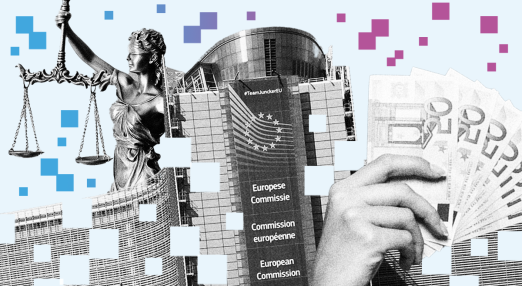
EDRi responds to European Commission’s consultation call on the Digital Omnibus
The European Commission opened consultations for the Digital Omnibus, EDRi responded by urging the Commission not to prioritise corporate interests and deregulation over privacy, transparency, and fundamental rights,...
-

Czech Big Brother Awards 2025: Volkswagen, Meta and the Czech authorities noted as Snoopers of the Year
EDRi member Iuridicum Remedium organised the 21st annual Big Brother Awards in Czech Republic, with Volkswagen, Meta, and the Czech Ministries of the Interior and Industry and Trade...
-

Greece’s AI Smart Policing system ruled unlawful after €4 million public spending\
A 4 million EUR “Smart Policing” programme enabling the use of AI technologies, including facial recognition software, which was deployed by the Hellenic Police has been ruled unlawful...
-

The EU AI Office must prioritise setting up the Advisory Forum
35 organisations and researchers call on the EU AI Office to provide clear information on the timeline and process of the establishment of the Advisory Forum, the only...
Donations from readers like you help us to publish the EDRi-gram and bring you the most important digital rights news.
DONATE TODAY
RECOMMENDED
- [📰read ] How Big Tech wrote secrecy into EU law to hide data centres’ environmental toll by Investigate Europe – An investigation has found that the European Commission incorporated a secrecy provision drafted by Microsoft and tech lobby group DigitalEurope into European Union law, blocking public access to critical information on data centers’ environmental impact. The confidentiality clause hides information about resource use of data centres, like energy efficiency and water consumption, from journalists, researchers and affected communities.
- [🏃🏿do] New learning module on Fundamental Rights Impact Assessment by ECNL: This new module on the ECNL Learning Center walks users through the different phases of Fundamental Rights Impact Assessments, helps identify good and poor practices, and explains how civil society can engage in these processes to strengthen accountability and drive change.
- [📰read ] Civil disobedience in digitally networked spaces by ECNL: This new research explores what civil disobedience looks like for migrants and solidarity movements. It offers an integrated analysis of protest rights, migration control, civil disobedience and digital surveillance. The paper explores how international legal frameworks apply when migrants protest against border violence, detention or deportation – either on the streets or online. It features nine comparative case studies from France, Germany, Greece, and the United States.
- [🏃🏿do] Sign the petition for right to life without digital coercion in Germany by Digitalcourage. The adoption of digital technologies into citizens’ interactions with governments and businesses improves convenience and accessibility in many cases but often this also restricts choices. EDRi member Digitalcourage’s petition urges German lawmakers to enshrine a new ‘right to a life without digital coercion’ in the German constitution. This right is to ensure that people can use basic government and commercial services without being forced to use a digital solution. The signatures will be presented at the German parliament in the week of 23 May (Germany’s Constitution Day). Sign the petition and help them spread the word!
EVENTS
-

RightsCon 2026
Each year, RightsCon convenes business leaders, policymakers, general counsels, government representatives, technologists, academics, journalists, and human rights advocates from around the world to tackle pressing issues at the...
-

Science Cafe: Why the current internet sucks
Media scholars Lucie Chateau and Michael Stevenson, and legal scholar Catalina Goanta on how Big Tech killed the internet.
-

Conference Digital Commons: Infrastructures, Design, and the Ethics of Autonomy
Digital Commons: Infrastructures, Design, and the Ethics of Autonomy is an international conference exploring how digital infrastructures shape contemporary life, and how communities, researchers, and technologists imagine and...
-
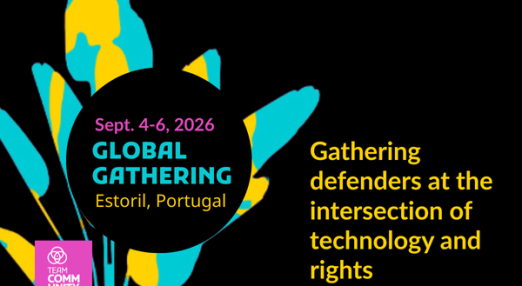
Global Gathering 2026
The Global Gathering brings together groups from around the world working on the most urgent technology-related challenges affecting human rights, social justice, civil society, and journalism at the...
-

EU DisinfoLab 2026 Annual Conference
The counter-disinformation community will meet for #Disinfo2026 in Vilnius, Lithuania. The main conference days on 7–8 October 2026 will feature a full programme of sessions in a variety...
JOBS
-

7amleh is hiring for Admin and Finance Officer – France
7amleh - The Arab Center for the Advancement of Social Media is a non-profit organization that advocates for Palestinian digital rights. 7amleh’s mission is to create a safe,...
-

Call for Nomination – EDRi Board elections 2026
EDRi is looking for interested candidates to become a member of the EDRi Board. As an EDRi Board Member, you will help shape the future of the organisation...
-

Freedom of the Press Foundation is hiring for a Research Reporter, USPFT
Freedom of the Press Foundation (FPF) is a non-profit organization that protects, defends, and empowers public-interest journalism in the 21st century.
-

The Center for Democracy and Technology is hiring for a Senior Policy Analyst/Counsel, Privacy & Data Program
The Center for Democracy & Technology (CDT) is a non-profit organisation working to promote democratic values and protect fundamental rights in the digital age. CDT advocates for human...
-

ICCL is hiring for an Enforce Artificial Intelligence Expert
The Irish Council for Civil Liberties (ICCL) is the foremost civil liberties organisation in Ireland with a long and successful track record of defending human rights and civil...
-

International Press Institute is hiring for a Press freedom editor/editorial lead
IPI was founded in 1950 by 34 editors from 15 countries who believed in the power of the free flow of information to promote peace. Today it is...