
Our work
EDRi is the biggest European network defending rights and freedoms online. We work to to challenge private and state actors who abuse their power to control or manipulate the public. We do so by advocating for robust and enforced laws, informing and mobilising people, promoting a healthy and accountable technology market, and building a movement of organisations and individuals committed to digital rights and freedoms in a connected world.
Filter resources
-
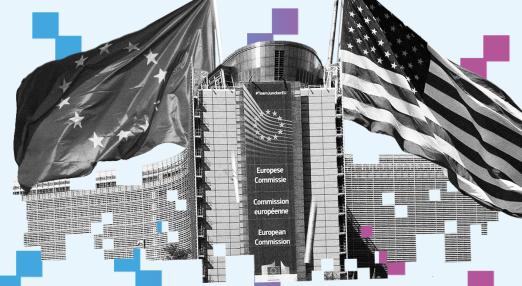
Europe’s digital laws are not bargaining chips
In reaction to the recent plan to “open a formal dialogue” with the US government on EU tech rules, EDRi and other civil society organisations urge the Commission to halt this plan that risks giving Big Tech a back door to weaken the EU digital rulebook and its enforcement.
Read more
-

A practical guide to joint investigations: lessons learned from one year of the Civic Journalism Coalition
One year ago, EDRi, European Center for Not-for-Profit Law (ECNL) and Lighthouse Reports launched the Civic Journalism Coalition with the aim of connecting investigative journalists with digital rights and civil society organisations. Today, that partnership is yielding tangible results, from journalistic investigations to a new practical guide for collaboration. Here is an overview of the activities - investigations, workshops and community-building efforts - that have shaped the Coalition.
Read more
-
EDRi-gram, 1 April 2026
What has the EDRi network been up to over the past few weeks? Find out the latest digital rights news in our bi-weekly newsletter. In this edition: Rushing, forcing, squeezing – EU’s deregulation & securitisation agenda makes a joke of our rights
Read more
-

Predatorgate: Breaking the chain of impunity of the spyware underworld
Greek courts have issued a landmark criminal first-instance conviction in the Predatorgate scandal, finding four individuals linked to the spyware vendor Intellexa guilty of unlawful surveillance, with cumulative sentences of 126 years and 8 months. Courts must now establish responsibility for who ordered this espionage. The case also resonates across the EU, challenging the widespread impunity of vendors and intensifying the calls for a ban on spyware.
Read more
-

New study reveals how young people are influenced by gamification features on Snapchat
A March 2026 study by Bits of Freedom shows how gamification features of Snapchat influence young people. Some respondents experience negative effectslike more screen time than they want or feeling pressured to interact with the app. The results of the research support the importance of freedom of choice on online platforms: young people need to have more control over where their attention is going, what they are seeing and what they are displaying of themselves online.
Read more
-
EDRi-gram, 18 March 2026
What has the EDRi network been up to over the past few weeks? Find out the latest digital rights news in our bi-weekly newsletter. In this edition: To scan or not to scan, EU lawmakers ask
Read more
-

Five lessons from three years of risk assessments under the Digital Services Act
Under the Digital Services Act (DSA), Big Tech platforms are required to annually assess systemic risks tied to their services and implement measures to mitigate them. EDRi member, the European Center for Not-for-Profit Law (ECNL) analysed the first three rounds of these risk assessments, spanning from 2023 to 2025, and identified five major gaps. In their current form, these assessments are unlikely to provide meaningful transparency or accountability for decisions affecting millions of internet users, raising fundamental questions about their usefulness and future direction.
Read more
-

Artificial Insecurity: how AI tools compromise confidentiality
Whatever you think about the promises or perils of AI, it’s becoming increasingly impossible to ignore that these tools are beset by glaring security vulnerabilities. From exposing user data to facilitating hacks, from undermining information integrity to creating supply chain vulnerabilities, AI tools are underpinned, and undermined, by dodgy security practices. As we’ll explore in this series, this has grave consequences for the confidentiality of our data, for information integrity, and for access to and availability of systems — all problems that a human rights-respecting approach can help solve.
Read more
-

DSA vs. Reality: Are children safer online?
How can social media be safer for people of all ages? During the hearing held in the European Parliament on 24th February, civil society experts led by Panoptykon debated possible solutions with Members of the European Parliament (MEPs) and officials from the European Commission. Yet YouTube, TikTok, and Meta dodged having to answer difficult questions.
Read more
-
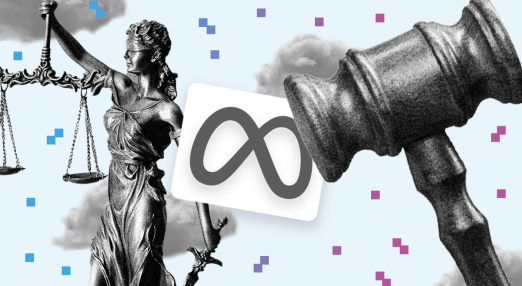
Court again rules in favour of Bits of Freedom: freedom of choice for Instagram and Facebook users remains intact
On 11 March, the Dutch Court of Appeal ruled on Meta's appeal against an earlier verdict brought by Bits of Freedom. The judgment was in favour of the digital human rights organisation. This is good news for Facebook and Instagram users in the Netherlands: they will continue to have the freedom to chose over what information appears on their feed.
Read more
-

The Digital Omnibus: A step back from the brink, but the risks remain
A first Council compromise on the Digital Omnibus removes several of the most dangerous changes that were originally proposed to the GDPR and the ePrivacy Directive. This is a welcome development, however, important risks remain. Some amendments could still weaken safeguards in practice, while new provisions on AI development and access to terminal equipment remain unresolved. Simplification should strengthen rights, not dilute them. The safest way to protect Europe’s digital rulebook is to reject the Digital Omnibus entirely.
Read more
-

Civil society calls for an ambitious Digital Fairness Act on World Consumer Rights Day
On World Consumer Rights Day, EDRi and dozens of other civil society organisations have signed a joint letter urging the European Commission to adopt a strong Digital Fairness Act (DFA). The coalition calls for rules that address manipulative digital business models and protect people from harmful online practices. The letter echoes the recommendations set out in EDRi’s recent policy paper on a rights-based approach to digital fairness.
Read more