
EDRi
Filter by...
-
TikTok catalyses extremist views and breaches electoral legislation in Romania
Romanian civil society is alarmed about political advertisement on TikTok breaching European and national laws and how that benefited an extremist candidate in the elections. EDRi member ApTI with 20 other NGOs from Romania call upon the European Commission and the national authorities to take swift action and investigate, as elections are still ongoing.
Read more
-
Free Software Foundation Europe intervenes in landmark Apple vs European Commission case
EDRi member Free Software Foundation Europe (FSFE) is taking a stand against Apple in a landmark case at the Court of Justice of the European Union, where the tech giant is challenging EU digital law. This intervention could help users and developers of Free Software.
Read more
-

EDRi’s leadership transition: laying the ground for just digital futures
EDRi’s Executive Director, Claire Fernandez, reflects on her time leading the organisation through many milestones and obstacles, as she gets ready to step down in 2025. She also lays out the next steps for EDRi’s leadership transition.
Read more
-

EU’s twin transition in crisis: green extractivism, militarisation and civil society’s role
In June 2024, technologists, advocates, researchers, designers, artists and funders. met at Mozfest, to dismantle the underlying assumptions behind the techno-solutionist paradigm of the "twin transition”. This article summarises the main points of debate, and lays out next steps by mapping examples of transnational solidarity among digital and climate justice groups that can inspire field-building moving forward.
Read more
-
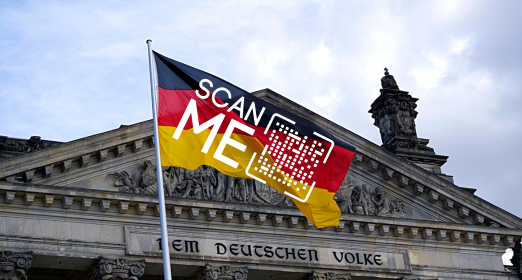
German petition calls for a fundamental right to ‘a life without digital coercion’
EDRi member Digitalcourage is calling for an amendment to the German constitution to establish a right to access basic services without being forced to use a digital solution. This was triggered by the observation that some essential service providers – Deutsche Post DHL Group (mail) and Deutsche Bahn (railways) – are increasingly forcing people to use their companies’ apps.
Read more
-

Non-fitted devices in the UK Home Office’s surveillance arsenal: Investigating the technology behind GPS fingerprint scanners
Privacy International’s technical research on the so-called non-fitted devices (NFDs) used by the UK Home Office to track migrants shows that these devices are intrusive and stigmatising by design. The use of NFDs is an expansion beyond the use of GPS ankle tags of the UK’s surveillance of migrants who are on immigration bail and subject to electronic monitoring conditions.
Read more
-

A new registry empowers the Slovenian public to monitor the use of AI systems by public institutions
EDRi affiliate Danes je nov dan recently launched their Public Sector AI Registry. The platform provides insight into the use of AI systems by Slovenia’s public institutions and highlights the lack of transparency from officials.
Read more
-

Promises unkept: The EU-US Data Privacy Framework under fire
A decade after Snowden’s revelations — and despite the public outrage they sparked — surveillance and mass data collection continue under the EU-U.S. Data Privacy Framework (DPF), despite persistent privacy concerns. This shift reflects a reorientation of EU priorities toward economic and geopolitical interests, risking compromises on privacy and data protection.
Read more
-

Tech and Society Summit: Decision-makers and civil society articulate a digital agenda that centers people, planet and democracy
On 1 October 2024, 41 civil society organisations – including EDRi – co-hosted the Tech and Society Summit. Throughout the day, EU decision-makers, journalists and civil society held discussions, joined panels and participated in activities that fostered dialogue about the intersections of technology, society and the environment.
Read more
-
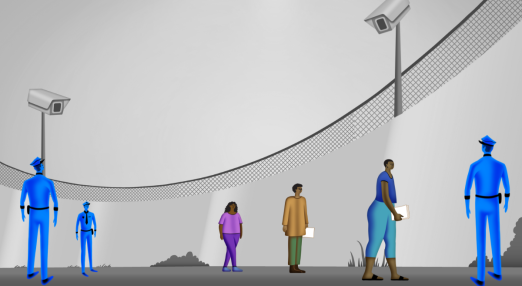
Deported for reporting a crime: the paradox of securitisation policies
The review of the Return Directive, which governs detention and deportation procedures in the EU, should not lead to the criminalisation of undocumented people. Rather, it should uphold their fundamental right to personal data protection by establishing firewalls that allow them to report crimes without fears of being deported.
Read more
-
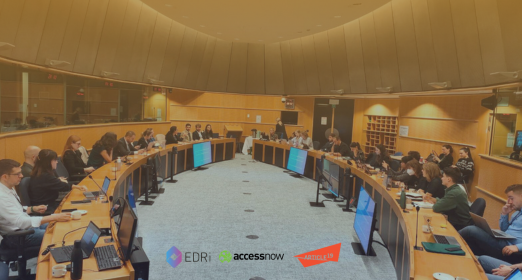
EDRi and members take EU decision-makers through 20 years of digital policy
This September, EDRi, Access Now and ARTICLE 19 took Parliamentarians through a rollercoaster ride of all things digital policy in the European Union. From the early internet and initial experiments in platform regulation, through more recent regulatory innovations, and finally to questions of security and surveillance, we shared a digital rights perspective of the good, the bad and the ugly of digital policy in the EU.
Read more
-
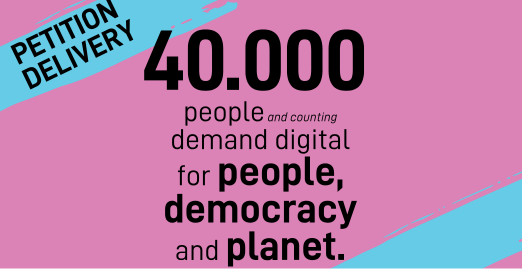
European decision-makers accept petition signatures at Tech and Society Summit
Over 40,000 people supported our petition – also co-signed by more than 30 civil society organisations – urging EU decision-makers to support the people’s visions of positive digital futures. Seven Members of the European Parliament accepted the petition signatures at the civil-society hosted Tech and Society Summit in Brussels on October 1.
Read more