
ePrivacy
Filter by...
-

ePrivacy hangs in the balance, but it’s not over yet…
Unless you have been living under a rock (read: outside the “Brussels bubble”) you will likely be aware of the long and winding road on which the proposed ePrivacy Regulation has been for the last three years. This is not unusual for a piece of European Union (EU) legislation – the 2018 General Data Protection […]
Read more
-

Twitter banning political ads – the tip of the iceberg
Twitter seems to have learnt the lessons of the 2016 US elections. After the revelation of the Cambridge Analytica scandal, the link between the use of social media targeted political advertisement and the voting behaviour of specific groups of people has been explored and explained again and again. We now understand how social media platforms […]
Read more
-

The sixth attempt to introduce mandatory SIM registration in Romania
A tragic failure by the police to save a teenage girl who was abducted but managed to call the 112 emergency number three times before she was murdered, led to the adoption of a new Emergency Ordinance in Romania. The law introduces several measures to improve the 112 system, one of which is mandatory SIM card registration for all prepaid users. Currently approximately ten million prepaid SIM cards are used in Romania.
Read more
-

Open letter to EU Member States: Deliver ePrivacy now!
On 11 October 2019, EDRi, together with four other civil society organisations, sent an open letter to EU Member States, to urge to conclude the negotiations on the ePrivacy Regulation. The letter highlights the urgent need for a strong ePrivacy Regulation in order to tackle the problems created by the commercial surveillance business models, and […]
Read more
-

Why weak encryption is everybody’s problem
Representatives of the UK Home Department, US Attorney General, US Homeland Security and Australian Home Affairs have joined forces to issue an open letter to Mark Zuckerberg. In their letter of 4 October, they urge Facebook to halt plans for end-to-end (aka strong) encryption across Facebook’s messaging platforms, unless such plans include “a means for […]
Read more
-

Right a wrong: ePrivacy now!
When the European Commission proposed to replace the outdated and improperly enforced 2002 ePrivacy Directive with a new ePrivacy Regulation in January 2017, it marked a cautiously hopeful moment for digital rights advocates across Europe. With the backdrop of the General Data Protection Regulation (GDPR), adopted in May 2018, Europe took a giant leap ahead […]
Read more
-

Your mail, their ads. Your rights?
In the digital space, “postal services” often snoop into your online conversations in order to market services or products according to what they find out from your chats. A law meant to limit this exploitative practice is stalled by the Council of European Union
Read more
-
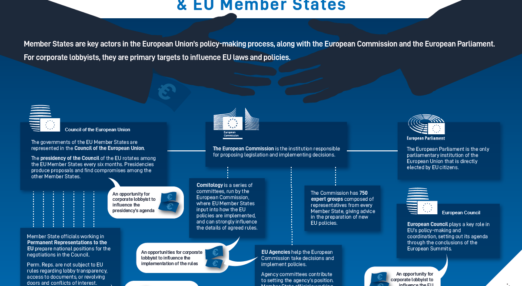
Captured states – e-Privacy Regulation victim of a “lobby onslaught”
Compared to non-governmental organisations and trade unions, private corporations are far better equipped to influence European level decision-making. A report “Captured states: when EU governments are a channel for corporate interests” by Corporate Europe Observatory’s (CEO) describes the various ways corporations approach the Member States of the European Union to maximise their impact.
Read more
-

ePrivacy: Private data retention through the back door
Blanket data retention has been prohibited in several court decisions by the European Court of Justice (ECJ) and the German Federal Constitutional Court (BVerfG). In spite of this, some of the EU Member States want to reintroduce it for the use by law enforcement authorities – through a back door in the ePrivacy Regulation.
Read more
-

EDRi’s Press Review 2018
During the past year, our work to defend citizens’ rights and freedoms online has gained an impressive visibility – we counted more than three hundred mentions! – in European and international media. Below, you can find our press review 2018. JANUARY 01/01 EU i linedans mellem desinformation og censur (Mandag Morgen)10/01 Does Software Piracy Hurt Sales? […]
Read more
-

Digital rights as a security objective: Abuses and loss of trust
Violations of human rights online can pose a real threat to our societies, from election’s security to societal polarisation. In this series of blogposts, we explain how and why digital rights must be treated as a security objective. In this third and final blogpost, we discuss how digital rights violations can exacerbate breaches to the […]
Read more
-

EU Member States willing to retain illegal data retention
With its judgments in April 2014 (Digital Rights Ireland ) and December 2016 (Tele2 ), the Court of Justice of the European Union (CJEU) ruled that blanket data retention was illegal under EU law. Rather than repealing their illegal data retention laws, EU Member States have instead adopted a tactic of ignoring the highest court […]
Read more