
Inclusive technologies
Filter resources
-

Why the electronic green vaccination certificate creates new problems instead of solving them
The National Council in Austria passed a legal basis for the electronic immunity certificate project within two days, skipping any kind of review procedure. The digital passes are not a ticket to a normal life, vaccination is. So, special attention should be paid to maintaining the trust of people and the voluntary nature of vaccination, ensuring that people's rights to privacy and freedom of choice are respected. EDRi's member epicenter.works explains what are the concerns with the deployment of green certificates and suggests alternatives to this project.
Read more
-

Why Facebook’s proposed hate speech policy on Zionism would only add fuel to the fire
Pressured to combat surging hate speech and anti-Semitism on its platform, Facebook is looking into how it should moderate the use of the word “Zionist,” and whether to add the term as a protected category under its hate speech policy. EDRi's member Access Now doesn’t think that is a good idea, particularly given Facebook’s inability to strictly adhere to human rights principles in its content moderation practices.
Read more
-
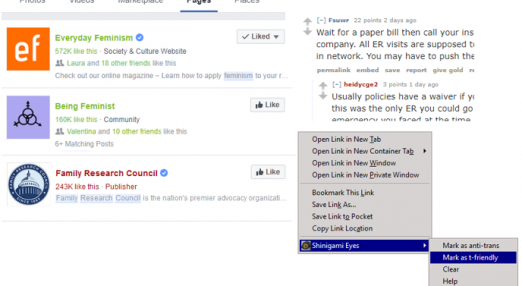
Electronic Frontier Norway (EFN) reports “Shinigami Eyes” to the Norwegian DPA for violation of GDPR
EDRi member Electronic Frontier Norway (EFN) found that the use of the program “Shinigami Eyes” and the operation of the database it uses constitute multiple violations of the GDPR and its Norwegian implementation. The most egregious of these being the clear violation of Article 9 which prohibits the registrations of people’s political views, philosophical convictions and physical persons sexual relations or sexual orientations etc.
Read more
-

At a glance: Does the EU Digital Services Act protect freedom of expression?
The Digital Services Act is in many ways an ambitious piece of legislation that seeks to make ‘Big Tech’ accountable to public authorities through new significant transparency and due diligence obligations. It also contains many provisions that could help protect users’ fundamental rights. Whether it will be successful at protecting freedom of expression from undue restrictions or reining in the power of Big Tech rather than cementing it, is, however, questionable. EDRi's member ARTICLE 19 share its first thoughts on why.
Read more
-
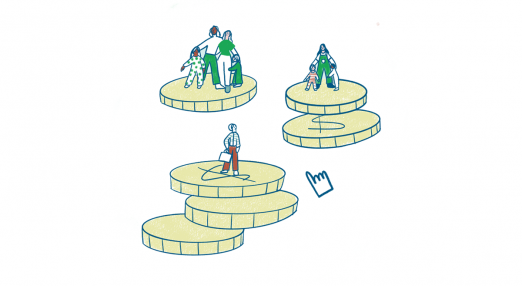
We want more than “symbolic” gestures in response to discriminatory algorithms
In an escalating scandal over child benefits, over 26.000 families were wrongly accused of fraud by the Dutch tax authority. Families were forced to repay tens of thousands of euros, resulting in unemployment, divorces, and families losing their homes. EDRi member Bits of Freedom reveals the discriminatory algorithms used by the authority and urges the government to ban their use and develop legislation on Artificial Intelligence.
Read more
-
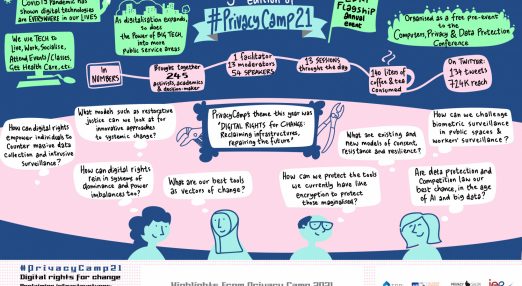
#PrivacyCamp21: Event Summary
The theme of the 9th edition of Privacy Camp was "Digital rights for change: Reclaiming infrastructures, repairing the future" and included thirteen sessions on a variety of topics. The event was attended by 250 people. If you missed the event or want a reminder of what happened in the session, find the session summaries below.
Read more
-

German Corona tracing app available without Google services
A handful of Free Software developers today achieved what official bodies have been missing for months: They have made available the German Corona Warn App for tracing Covid-19 risk contacts in a version that is completely free of dependencies on Google and available in F-Droid, the Free Software app store.
Read more
-
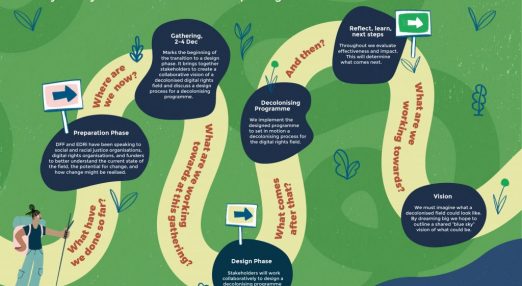
Envisioning a Decolonised Digital Rights Field – and Charting Next Steps
This week, a group of 30 participants, working on issues of racial, social and economic justice, digital rights, and in philanthropy, came together to not only collectively imagine just that, but also to identify the building blocks for a process that might help us get there.
Read more
-

How (not) to set up a public warning system
What is the best way to alert people about catastrophes? Germany went with proprietary apps which caused the recent warning day ("Warntag") to become an official failure. EDRi member Free Software Foundation Europe (FSFE) analysed the situation and found more robust solutions that respect user rights.
Read more
-
EU Open Source Policy: good analysis, missing concrete next steps
EDRi's member, Free Software Foundation Europe (FSFE), calls upon the Commission to present and implement concrete measures and activities in the coming weeks and months, regarding its Open Source Strategy.
Read more
-
The new and improved EDRi-gram
The EDRi-gram that you know and love has received a facelift! Welcome to EDRi-gram 2.0. We know that change can be hard but we hope that you are as excited as we are to take the newsletter and EDRi’s efforts to the next level.
Read more
-
Digital Services Act: what we learned about tackling the power of digital platforms
A year into EDRi’s policy and advocacy efforts to improve the DSA, we take stock of our efforts in mapping challenges and successes in enabling positive change.
Read more