
Privacy and confidentiality
Filter resources
-

Right a wrong: ePrivacy now!
When the European Commission proposed to replace the outdated and improperly enforced 2002 ePrivacy Directive with a new ePrivacy Regulation in January 2017, it marked a cautiously hopeful moment for digital rights advocates across Europe. With the backdrop of the General Data Protection Regulation (GDPR), adopted in May 2018, Europe took a giant leap ahead […]
Read more
-

CJEU on cookies: ‘Consent or be tracked’ is not an option
European Digital Rights (EDRi) welcomes the CJEU's confirmation that under the current data protection framework, cookies can only be set if users have given consent that is valid under the General Data Protection Regulation (GDPR).
Read more
-

Your mail, their ads. Your rights?
In the digital space, “postal services” often snoop into your online conversations in order to market services or products according to what they find out from your chats. A law meant to limit this exploitative practice is stalled by the Council of European Union
Read more
-

Civil society calls for a proper assessment of data retention
In preparation of a possible proposal for new legislation, the European Commission is conducting informal dialogues with different stakeholders to research about the possibilities of data retention legislation that complies with the rulings of the Court of Justice of the European Union (CJEU) and the European Court of Human Rights (ECtHR). As part of these […]
Read more
-

Your family is none of their business
Today’s children have the most complex digital footprint in human history, with their data being collected by private companies and governments alike.
Read more
-

Greece: Complaint filed against breach of EU data protection law
On 30 May 2019, EDRi observer Homo Digitalis filed a complaint to the European Commission against a breach of EU data protection law by Greece. The European Commission registered the complaint under the reference number CHAP(2019)01564 on 6 June 2019, and its services will assess the complaint and provide a reply within 12 months.
Read more
-
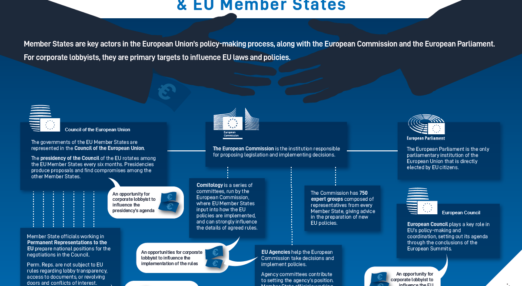
Captured states – e-Privacy Regulation victim of a “lobby onslaught”
Compared to non-governmental organisations and trade unions, private corporations are far better equipped to influence European level decision-making. A report “Captured states: when EU governments are a channel for corporate interests” by Corporate Europe Observatory’s (CEO) describes the various ways corporations approach the Member States of the European Union to maximise their impact.
Read more
-

Why should we vote in the EU elections?
What are your plans for the coming days? We have a suggestion: The European elections will take place – and it’s absolutely crucial to go and vote!
Read more
-

ePrivacy: Private data retention through the back door
Blanket data retention has been prohibited in several court decisions by the European Court of Justice (ECJ) and the German Federal Constitutional Court (BVerfG). In spite of this, some of the EU Member States want to reintroduce it for the use by law enforcement authorities – through a back door in the ePrivacy Regulation.
Read more
-

Austria: New “responsibility” law will lead to self-censorship
Shortly after the EU gave green light to upload filters, two laws were proposed in Austria, with the alleged goal of tackling online hate speech, that rang the alarm bells.
Read more
-

EU Council Presidency outlines future counter-terrorism priorities
A note produced by the Romanian Presidency of the Council of the European Union sets out the EU’s response to terrorism since 2015. It highlights the main measures adopted and calls for a “reflection process on the way forward” in a number of areas including “interoperability and extended use of biometrics”; implementing the EU Passenger […]
Read more
-
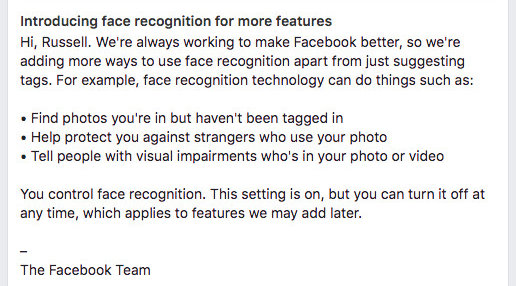
The art of dodging questions – Facebook’s privacy policies
Remember in April 2018, after the Cambridge Analytica scandal broke, we sent a series of 13 questions to Facebook about their users’ data exploitation policy. Months later, Facebook got back to us with answers. Here is a critical analysis of their response. Recognising people’s face without biometric data? The first questions (1a and 1b) related […]
Read more