
Profiling practices
Filter resources
-

Mozilla Fellow Petra Molnar joins us to work on AI & discrimination
Starting on 1 October, Petra Molnar will join our team as a Mozilla Fellow. She is a lawyer specialising in migration, human rights, and technology, and has a Masters of Social Anthropology from York University, a Juris Doctorate from the University of Toronto, and an LL.M in International Law from the University of Cambridge. Mozilla […]
Read more
-

Your mail, their ads. Your rights?
In the digital space, “postal services” often snoop into your online conversations in order to market services or products according to what they find out from your chats. A law meant to limit this exploitative practice is stalled by the Council of European Union
Read more
-

The digital rights of LGBTQ+ people: When technology reinforces societal oppressions
Online surveillance and censorship impact everyone’s rights, and particularly those of already marginalised groups such as lesbian, gay, bisexual, transgender and queer and others (LGBTQ+) people. The use of new technologies usually reinforces existing societal biases, making those communities particularly prone to discrimination and security threats. As a follow-up to Pride Month, here is an […]
Read more
-

Real Time Bidding: The auction for your attention
The digitalisation of marketing has introduced novel industry practices and business models. Some of these new systems have developed into crucial threats to people’s freedoms. A particularly alarming one is Real Time Bidding (RTB). When you visit a website, you often encounter content published by the website’s owner/author, and external ads. Since a certain type […]
Read more
-
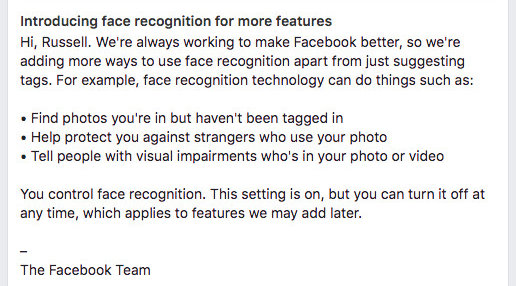
The art of dodging questions – Facebook’s privacy policies
Remember in April 2018, after the Cambridge Analytica scandal broke, we sent a series of 13 questions to Facebook about their users’ data exploitation policy. Months later, Facebook got back to us with answers. Here is a critical analysis of their response. Recognising people’s face without biometric data? The first questions (1a and 1b) related […]
Read more
-

Google and IAB: Knowingly enabling intrusive profiling
On 28 January, EDRi member Panoptykon joined a complaint against Google and the Interactive Advertising Bureau (IAB) in Poland, after it had become clear that the advertising categories provided by these entities are enabling the processing of extremely sensitive data of European citizens. On 20 February, new evidence was published proving that the IAB was […]
Read more
-

Corporate Europe Observatory: e-Privacy Regulation victim of a “lobby onslaught”
On 6 February 2019, Corporate Europe Observatory (CEO) released its report “Captured states: when EU governments are a channel for corporate interests”. The report describes the various ways corporations influence the Member States of the European Union. It shows how they are far better equipped than non-governmental organisations and trade unions to access documents and […]
Read more
-

Austrian postal service involved in a data scandal
After a media report from the media outlet “Addendum”, the Austrian postal service faces public outcry over its data gathering and sales activities. The Austrian Post is known for not only exercising their main duty of post delivery, but also selling addresses of Austrian residents to companies and political parties, for advertising. The media report […]
Read more
-

Germany: New police law proposals threaten civil rights
The number of police laws in Germany has increased in recent months.
Read more
-

Complaints: Google infringes GDPR’s informed consent principle
On 27 November 2018, seven members of the European Consumer Organisation (BEUC) have launched complaints with their national Data Protection Authorities (DPAs) about Google potentially infringing the General Data Protection Regulation (GDPR).
Read more
-

Digital rights as a security objective: Fighting disinformation
Violations of human rights online, most notably the right to data protection, can pose a real threat to electoral security and societal polarisation.
Read more
-

Facebook fails political ads tests several times
On 28 June 2018, Facebook announced it had set forth a compulsory “Paid for by” feature, limiting anonymity by requiring to submit a valid ID and proof of residence. This had been introduced in reaction to a series of election interference in the past year through foreign political advertising on social media platforms.
Read more