
Information democracy and participation
Powerful companies and governments control the way the internet and new technologies are deployed. These actors blur the lines on corporate power in ways that have tremendous impact on people and democracies. The dominant business model of ‘Big tech’ platforms is based on surveillance, polarization and power imbalances. This ‘surveillance capitalism’ has had a global impact on democracy. For example, state and private actors can use the internet and technologies to spread political disinformation, to manipulate electoral results, to attack human rights defenders and to limit civic space.
Filter resources
-
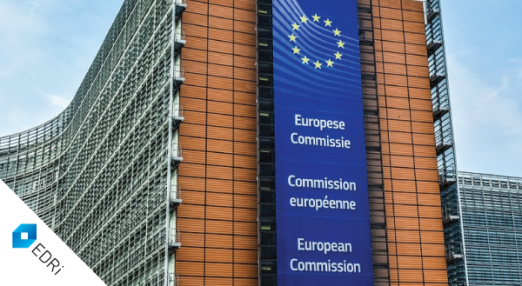
EU Commissioners candidates spoke: State of play for digital rights
On 1 November 2019, the new College of European Commissioners – comprising 27 representatives (one from each EU Member State), rather than the usual 28, thanks to Brexit – are scheduled to take their seats for the next five years, led by incoming President-elect, Ursula von der Leyen.
Read more
-
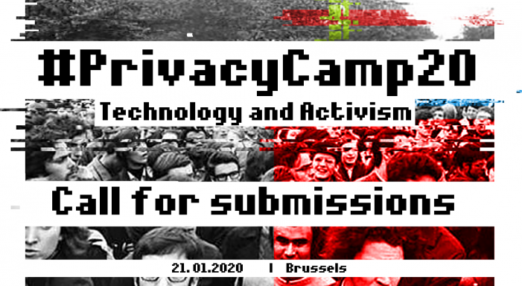
#PrivacyCamp20: Technology and Activism
The 8th annual Privacy Camp will take place in Brussels on 21 January 2020. With the focus on “Technology and Activism”, Privacy Camp 2020 will explore the significant role digital technology plays in activism, enabling people to bypass traditional power structures and fostering new forms of civil disobedience, but also enhancing the surveillance power of […]
Read more
-
Net neutrality overhaul: 5G, zero-rating, parental control, DPI
The Body of European Regulators for Electronic Communications (BEREC) is currently in the process of overhauling their guidelines on the implementation of the Regulation (EU) 2015/2120, which forms the legal basis of the EU’s net neutrality rules. At its most recent plenary, BEREC produced new draft guidelines and opened a public consultation on this draft. […]
Read more
-
EU copyright dialogues: The next battleground to prevent upload filters
On 15 October, the European Commission held the first of the stakeholder dialogues, mandated by Article 17 of the EU copyright Directive, inviting 65 organisations to help map current practices, and opening the door for deeper collaboration in the future.
Read more
-
Why weak encryption is everybody’s problem
Representatives of the UK Home Department, US Attorney General, US Homeland Security and Australian Home Affairs have joined forces to issue an open letter to Mark Zuckerberg. In their letter of 4 October, they urge Facebook to halt plans for end-to-end (aka strong) encryption across Facebook’s messaging platforms, unless such plans include “a means for […]
Read more
-
Content regulation – what’s the (online) harm?
In recent years, the national legislators in EU Member States have been pushing for new laws to combat negative societal phenomena such as hateful or terrorist content online. These regulatory efforts have one common denominator: they shift the focus from conditional intermediary liability to holding intermediaries directly responsible for the dissemination of illegal content on their platforms.
Read more
-

CJEU ruling on fighting defamation online could open the door for upload filters
Today, on 3 October 2019, the Court of Justice of the European Union (CJEU) gave its ruling in the case C‑18/18 Glawischnig-Piesczek v Facebook. The case is related to injunctions obliging a service provider to stop the dissemination of a defamatory comment. Some aspects of the decision could pose a threat for freedom of expression, in particular that of political dissidents who may be accused of defamatory practices.
Read more
-

CJEU on cookies: ‘Consent or be tracked’ is not an option
European Digital Rights (EDRi) welcomes the CJEU's confirmation that under the current data protection framework, cookies can only be set if users have given consent that is valid under the General Data Protection Regulation (GDPR).
Read more
-

Facebook users blocked simply for mentioning a name?
Merely writing or including two words, in this case “Tommy Robinson”, in a Facebook post or link is enough to get the post removed and the writer blocked. At least it seems so in Denmark and Sweden.
Read more
-

Your mail, their ads. Your rights?
In the digital space, “postal services” often snoop into your online conversations in order to market services or products according to what they find out from your chats. A law meant to limit this exploitative practice is stalled by the Council of European Union
Read more
-
CJEU: Public documents could be censored because of copyright
On 29 July 2019, the Court of Justice of the European Union (CJEU) delivered a judgment that could have serious impact on freedom of expression. The case (C‑469/17) concerns Funke Medien NRW GmbH, the editor of the German daily newspaper Westdeutsche Allgemeine Zeitung, and Bundesrepublik Deutschland (Federal Republic of Germany). It follows a request in […]
Read more
-

The Netherlands, aim for a more ambitious copyright implementation!
All EU Member States are obliged to implement the newly adopted EU Copyright Directive, including its controversial Article 17. But how to interpret it, is up to them. In the Netherlands, there is currently a draft bill, which is unfortunately very disappointing. The government really needs to try much harder to protect the interests of […]
Read more