
Just and open internet and technologies
New digital technology and the internet brought with it a promise of equal access to knowledge, openness and connection. Their ubiquity has brought opportunity for progress. However, access to digital technology is vastly unevenly distributed. Technology, especially when relying on artificial intelligence, location and biometric data, can amplify social, racial and environmental injustices. We work to bring back the original purpose of an open internet and enable inclusive, sustainable technologies that work for all and for the greater good.
Filter resources
-

Why the EU age-verification tool does not solve privacy concerns
An EU legislative proposal for a social media ban will be presented at the State of the European Union (SOTEU) annual address, but the tools which are pitched as “ready” and “privacy-preserving” fail on both counts. Here is a technical account of the shortcomings.
Read more
-
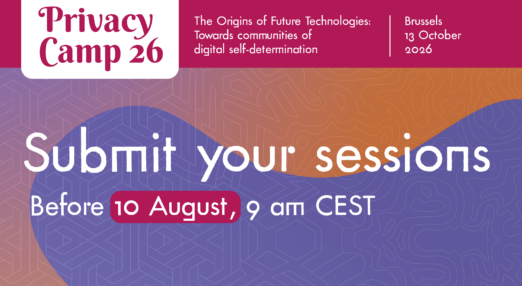
#PrivacyCamp26: Call for sessions
Privacy Camp hosts its 14th edition on 13 October 2026, in Brussels and online. For people living in Europe and across the globe, the impact technology has on our lives becomes ever more acute, ever more heavy and impossible to deny. Digital technologies shape how people work, organise, communicate, access services, cross borders, learn, create and resist. They can support community power and collective care. They can also deepen surveillance, extraction, discrimination, militarisation and environmental harm.
Read more
-

EDRi-gram, 16 July 2026
What has the EDRi network been up to over the past few weeks? Find out the latest digital rights news in our bi-weekly newsletter. In this edition: Turning up the heat – Commission backs social media bans, Apple held accountable, summer to-dos, & more!
Read more
-
EDRi-gram, 1 July 2026
What has the EDRi network been up to over the past few weeks? Find out the latest digital rights news in our bi-weekly newsletter. In this edition: The heat is on
Read more
-
EDRi Annual Report 2025: Championing digital rights in the deregulation era
In 2025, the EU entered an era of deregulation in which hard-fought digital rights protections are being diluted. With our long-term vision for digital futures in mind, EDRi's work in 2025 focused on protecting digital rights legislation and advocating for human-centred perspectives. We also adopted our new agile and responsive strategy which will guide our work for the next five years.
Read more
-

What’s behind the EU’s digitalisation push? Surveillance, control and exclusion
The EU institutions have been engaged in a broad and wholesale digitalisation project but underneath the rhetoric of efficiency, modernisation, and citizen empowerment lies a more troubling reality. It is not a mere technical upgrade of public services, but a political choice, long in the making, to forego care and rights of individuals in favour of normalising surveillance, control and exclusion of the most marginalised. This blog explores the various facets of the EU’s digital welfare state push, and what it means for the relationship between people and the state.
Read more
-
EDRi-gram, 28 May 2026
What has the EDRi network been up to over the past few weeks? Find out the latest digital rights news in our bi-weekly newsletter. In this edition: May the force be with the digital rights community.
Read more
-

“Fight for Us, Not for Them”: A Public Interest Vision for EU Tech Policy — programme and new speakers announced
As EU digital policy faces growing pressure from deregulation and “simplification” agendas, civil society experts, lawmakers, regulators, and journalists are coming together in Brussels and online to make the case for a bold public-interest vision of technology policy: one that protects people, communities, democracy, and our fundamental rights.
Read more
-
Ireland investigates Meta for breaching the DSA – a year on from our complaint
The Irish Digital Services Coordinator Coimisiún na Meán (CnaM) has announced a formal investigation last week into whether Meta breaches the DSA’s obligation to offer users access to alternative news feeds without profiling – a promising step towards tackling toxic platform design. The investigation comes after Bits of Freedom, EDRi, GFF and Convocation Research + Design filed a complaint about the issue. At the same time, Meta’s abuses have already gone on for too long. We need a fast resolution from the CnaM in order to protect the digital rights of people across Europe and to show that the EU stands ready to enforce its platform laws.
Read more
-

EDRi-gram, 30 April 2026
What has the EDRi network been up to over the past few weeks? Find out the latest digital rights news in our bi-weekly newsletter. In this edition: Young people across Europe say social media bans won’t fix broken platforms
Read more
-

Youth organisations demand social media change, not bans
The protection of young people from online harms remains high on the political agenda, but the debate continue to focus on age gates and social media bans. In response, 31 youth organisations and youth activists – the intended recipients of these ‘protective’ measures – have joined forces to speak up against their own exclusion. They warn that the real solution lies in addressing the root cause of the problem: the design and business model of platforms.
Read more
-
EDRi-gram, 15 April 2026
What has the EDRi network been up to over the past few weeks? Find out the latest digital rights news in our bi-weekly newsletter. In this edition: Cracking the egg shells: what's inside the latest in EU digital rights?
Read more