
ePrivacy
Filter by...
-
New e-Privacy rules need improvements to help build trust
On 10 January 2017, the European Commission published its long-awaited proposal for an e-Privacy Regulation (ePR) to replace the 2002 e-Privacy Directive (ePD). This new regulation complements the General Data Protection Regulation (GDPR), adding more clarity and legal certainty for individuals and businesses – helping to protect our personal data by providing specific rules related […]
Read more
-

Are net neutrality and privacy Europe’s brilliant way of trumping destructionism?
For the online economy to work, trust and competition are needed. Trust to drive take-up of services and competition to drive down prices and drive up innovation. Privacy The 2016 Eurobarometer (pdf) survey found that nearly 60% of individuals in the EU had avoided certain websites for privacy reasons, while 82% were in favour of […]
Read more
-

2017 – another extremely challenging year for digital rights
The agenda of the year 2016 for the protection of digital rights was filled with challenges, and it looks like 2017 is not going to be any easier.
Read more
-
e-Privacy revision: Document pool
New devices are being continually developed that increasingly have the ability to connect to the internet and communicate between themselves. These devices, while making our life easier in many ways, also create major privacy and security risks. We explained in our series of blogposts on privacy the freedoms that are under threat, if these technologies are […]
Read more
-

e-Privacy proposal – Commission leaves the European Parliament with lots of work to do
Today, on 10 January 2017, the European Commission published its proposal for an e-Privacy Regulation. This legislation is crucial to provide clear rules on tracking individuals as they surf the web, and on freedom of communication more generally. The European Commission has resisted the most extreme demands from certain parts of industry. said Joe McNamee, […]
Read more
-
EDRi’s Press Review 2016
During the past year, our work to defend citizens’ rights and freedoms online has gained an impressive visibility – we counted nearly four hundred mentions! – in European and international media. Below, you can find our press review 2016.
Read more
-
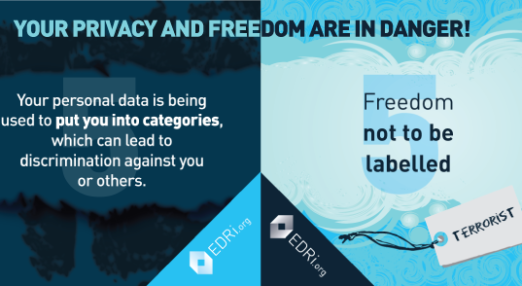
#5 Freedom not to be labelled: How to fight profiling
This is the fifth blogpost of our series dedicated to privacy, security and freedoms. In the next weeks, we will explain how your freedoms are under threat, and what you can do to fight back.
Read more
-
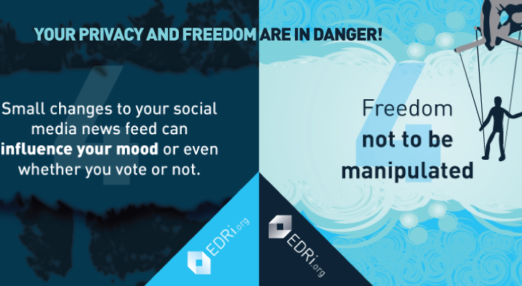
#4 Freedom not to be manipulated: How to fight weapons of math destruction*
This is the fourth blogpost of our series dedicated to privacy, security and freedoms. In the next weeks, we will explain how your freedoms are under threat, and what you can do to fight back.
Read more
-
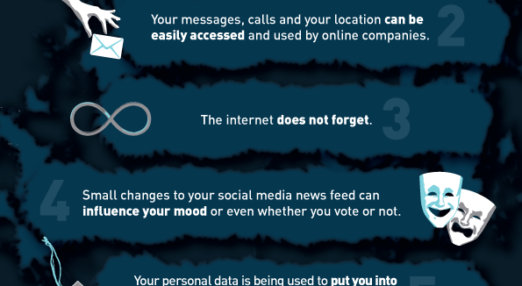
Your privacy, security and freedom online are in danger
We carry more intimate information on the devices in our pockets and on our wrists than most personal diaries. For instance, our browsing history alone can already tell a lot about us and who we are, where we are, what we do in our free time, our fears, our political views and our relationships. Unscrupulous […]
Read more
-

What digital rights are at imminent risk? All of them.
Our civil rights in the digital environment are based on our rights to protect our personal security and data, our right to communicate freely, and our right for any restrictions to be necessary, predictable and proportionate. Every one of these rights is now under imminent threat.
Read more
-

Massive lobby against personal communications security has started
Since 2002, European citizens’ freedom of communication, the security of our communications devices, and the protection of our personal data in the online world have been safeguarded by the so-called e-Privacy Directive. This Directive is now up for renewal. Unsurprisingly, after the big online companies launched probably the biggest ever lobbying campaign to undermine the […]
Read more
-
Leaked EU Communication – Part 1: Privatised censorship and surveillance
EU Charter of Fundamental Rights: Subject to the principle of proportionality, limitations [to fundamental rights] may be made only if they are necessary and genuinely meet objectives of general interest recognised by the Union or the need to protect the rights and freedoms of others. A draft European Commission Communication on Platforms has been leaked. […]
Read more