
Privacy
Filter by...
-
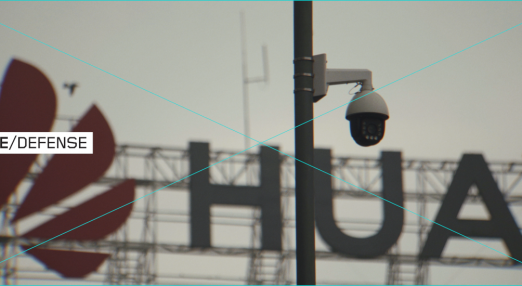
Total surveillance law proposed in Serbia
The public debate on the Draft Law on Internal Affairs has officially introduced into legal procedure provisions for the use of mass biometric surveillance in public spaces in Serbia, advanced technologies equipped with facial recognition software that enable capturing and processing of large amounts of sensitive personal data in real time. EDRi's member the SHARE Foundation has used the opportunity of the Draft Law public debate to submit its legal comments on the provisions regulating mass biometric surveillance in public spaces, demanding from the authorities to declare a moratorium on the use of such technologies and systems in Serbia without delay.
Read more
-

What’s up with WhatsApp encrypted backups
WhatsApp is rolling out an option for users to encrypt their message backups, and that is a big win for user privacy and security. The new feature is expected to be available for both iOS and Android “in the coming weeks.” EDRi's member Electronic Frontier Foundation (EFF) has pointed out unencrypted backups as a huge weakness for WhatsApp and for any messenger that claims to offer end-to-end encryption, and we applaud this improvement. Next, encryption for backups should become the default for all users, not just an option.
Read more
-

Register research turned privacy disaster. Epicenter.works nominates Sebastian Kurz for a Big Brother Award
Research is important. Using research as a cover to obtain unchecked access to sensitive official data is not. At the beginning of July, the Austrian chancellor, Sebastian Kurz, submitted to pre-parliamentary consultation a bill that would cause a seismic shift in how the government treats its citizens’ data. EDRi's member epicenter.works shares that from a privacy perspective the present bill is fundamentally flawed and places an enormous amount of data covering the entire population at risk for abuse.
Read more
-

How a rotten Apple (and bad legislation) could spoil our private communications
In August 2021, Apple announced significant changes to their privacy settings for messaging and cloud services, only to “pause” it in early September. Earlier this summer, the European Parliament adopted in a final vote the derogation to the main piece of EU legislation protecting privacy, the ePrivacy Directive, to allow Big Tech to scan your emails, messages, and other online communications.In August 2021, Apple announced significant changes to their privacy settings for messaging and cloud services, only to “pause” it in early September. Earlier this summer, the European Parliament adopted in a final vote the derogation to the main piece of EU legislation protecting privacy, the ePrivacy Directive, to allow Big Tech to scan your emails, messages, and other online communications.
Read more
-
iSpy with my little eye: Apple’s u-turn on privacy sets a precedent and threatens everyone’s security
Apple has just announced significant changes to their privacy settings for messaging and cloud services: first, it will scan all images sent by child accounts; second, it will scan all photos as they are being uploaded to iCloud. With these changes, Apple is threatening everyone’s privacy, security and confidentiality.
Read more
-
Can the EU Digital Services Act contest the power of Big Tech’s algorithms?
A progressive report on the Digital Services Act (DSA) adopted by the Committee on Civil Liberties, Justice and Home Affairs (LIBE) in the European Parliament in July is the first major improvement of the draft law presented by the European Commission in December. MEPs expressed support for default protections from tracking and profiling for the purposes of advertising and recommending or ranking content. Now the ball is in the court of the leading committee on internal market and consumer protection (IMCO), which received 1313 pages of amendments to be voted in November. EDRi's member Panoptykon Foundation explores if the Parliament would succeed in adopting a position that will contest the power of dominant online platforms which shape the digital public sphere in line with their commercial interests, at the expense of individuals and societies.
Read more
-

Europe’s Data Retention Saga and its Risks for Digital Rights
It seems that despite several Court of Justice of the European Union (CJEU) decisions in this area, the data retention saga is unlikely to come to an end any time soon. After the invalidation of its previous instrument, the 2006 Data Retention Directive, the European Commission is currently trying to devise a new plan for the retention of traffic and location data for law enforcement and security purposes in the European Union (EU). The Commission stands at a crossroad: to intervene or not to intervene, that is the question.
Read more
-

It’s official. Your private communications can (and will) be spied on
On 6 July, the European Parliament adopted in a final vote the derogation to the main piece of EU legislation protecting privacy, the ePrivacy Directive, to allow Big Tech to scan your emails, messages and other online communications.
Read more
-

Fear and loathing in the UK adequacy decision
The Council of the European Union unanimously approved the United Kingdom (UK) draft adequacy decision. In an ideal world, this would indicate that the UK offers an adequate level of protection for personal data, and would signal their willingness to retain those standards. Unfortunately, reality tells a different story, that should be worrying for human rights advocates on both sides of the channel.
Read more
-

Five reasons to claim victory on the EU Digital COVID Certificate
On 8 June 2021, the European Parliament voted on the interinstitutional compromise text on the regulation(s) on the EU Digital COVID Certificate (EU DCC, also known as the Digital Green Certificate and the European Green Pass). The proposed legislation regulates the “framework for the issuance, verification and acceptance of interoperable certificates on vaccination, testing and recovery” with aim of facilitating free movement during the COVID-19 pandemic.
Read more
-
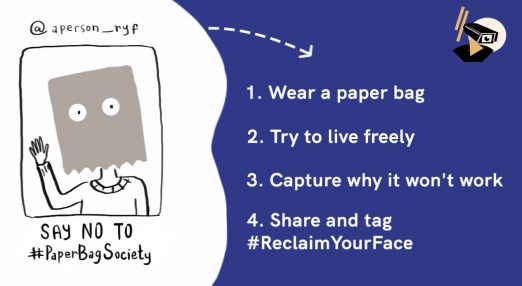
The #PaperBagSociety challenge
The #PaperBagSociety is a social media challenge part of the #ReclaimYourFace campaign that invites everyone to share online the impact of living life with a paperbag on the head. With it, we aim to raise awareness of how ridiculous is to avoid facial recognition technologies in public spaces and why we need to build an alternative future, free from biometric mass surveillance.
Read more
-

German Big Brother Awards call out top privacy abusers
On Friday, 11 June 2021, the German Big Brother Awards (BBA) gala was held in Bielefeld, Germany. Organised by EDRi member Digitalcourage with jury members and support from several German groups, including other EDRi members, these awards have been held since 2000
Read more