
Artificial Insecurity: how AI tools compromise confidentiality
Whatever you think about the promises or perils of AI, it’s becoming increasingly impossible to ignore that these tools are beset by glaring security vulnerabilities. From exposing user data to facilitating hacks, from undermining information integrity to creating supply chain vulnerabilities, AI tools are underpinned, and undermined, by dodgy security practices. As we’ll explore in this series, this has grave consequences for the confidentiality of our data, for information integrity, and for access to and availability of systems — all problems that a human rights-respecting approach can help solve.
Filter resources
-

Artificial Insecurity: how AI tools compromise confidentiality
Whatever you think about the promises or perils of AI, it’s becoming increasingly impossible to ignore that these tools are beset by glaring security vulnerabilities. From exposing user data to facilitating hacks, from undermining information integrity to creating supply chain vulnerabilities, AI tools are underpinned, and undermined, by dodgy security practices. As we’ll explore in this series, this has grave consequences for the confidentiality of our data, for information integrity, and for access to and availability of systems — all problems that a human rights-respecting approach can help solve.
Read more
-

The Digital Omnibus: A step back from the brink, but the risks remain
A first Council compromise on the Digital Omnibus removes several of the most dangerous changes that were originally proposed to the GDPR and the ePrivacy Directive. This is a welcome development, however, important risks remain. Some amendments could still weaken safeguards in practice, while new provisions on AI development and access to terminal equipment remain unresolved. Simplification should strengthen rights, not dilute them. The safest way to protect Europe’s digital rulebook is to reject the Digital Omnibus entirely.
Read more
-

Fewer rules, more innovation? The miscalculation of the new Brussels
Is European regulation really holding back innovation, or is it a strategic asset that we are about to sell off? This piece debunks the official narrative of a European Commission that claims to be “learning to regulate better”. Through incisive analysis, it warns that the fear of falling behind in the artificial intelligence race is pushing Brussels to sacrifice fundamental rights in the name of a misunderstood competitiveness.
Read more
-

Reopening GDPR and ePrivacy through the Digital Omnibus: a risky path for EU digital rights
EDRi has assessed the Digital Omnibus proposals affecting the General Data Protection Regulation (GDPR) and the ePrivacy framework. While presented as simplification, the changes amount to deregulation in effect, weakening fundamental rights safeguards, increasing legal uncertainty, and advancing through a process that falls short of democratic lawmaking standards.
Read more
-
Fighting for algorithmic justice: lessons learned in working closely with affected people
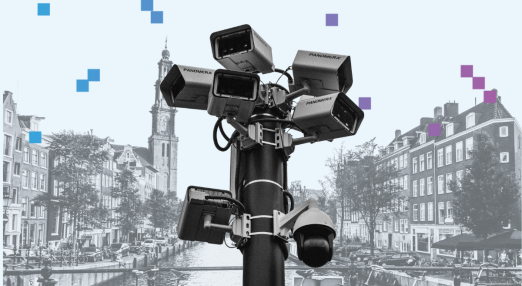
Bits of Freedom shares lessons learned while working on “Amsterdam Top400”, an invasive municipality project which involved the use of predictive policing and led to unwanted interference in the private lives of young people. Together with a coalition of professionals from different background and affected individuals, they explored the possibility of holding the municipality of Amsterdam accountable for violations of children’s rights, data protection law, and fundamental freedoms.
Read more
-

When data relate to us
The EDPS vs. Single Resolution Board judgment goes to the heart of the EU’s fundamental right to data protection, shaping how artificial intelligence, data spaces and so-called privacy-enhancing technologies (PETs) will be governed in practice. The ruling of the Court of Justice of the European Union (CJEU) arrives at a crucial time to reiterate what counts as personal data, reinforcing the importance of the protection that the GDPR was designed to guarantee.
Read more
-

Europe is dismantling its digital rights from within
The European Commission’s new Digital Omnibus is presented as simple “streamlining”, but in practice it dismantles key safeguards in the GDPR, ePrivacy rules and the AI Act. It would make access to device data easier, weaken limits on automated decision-making and lower protections against discriminatory AI.
Read more
-

Artificial intelligence is not as artificial as you might think
AI systems involve a huge amount of human effort at the hands of millions of workers, often in Global South countries, working in precarious conditions. In this blog, EDRi member SUPERRR Lab dive into the lives of data workers, how they are exploited and undermined by tech companies, and how these workers are now collectively advocating for their rights.
Read more
-

Press Release: Commission’s Digital Omnibus is a major rollback of EU digital protections
Today the European Commission has published two Digital Omnibus proposals, reopening the EU’s core protections against harm in the digital age. This step risks dismantling the rules-based system that was hard-won over decades, endangering the very foundation of human rights and tech policy in the EU.
Read more
-

EU adopts Digital Trade Agreement with Singapore despite warnings: a setback for digital rights and democratic oversight
The European Parliament has approved the EU–Singapore Digital Trade Agreement, rejecting a motion to seek a Court of Justice opinion on its legality. This decision weakens the Union’s capacity to safeguard privacy, data protection, and accountability over software systems, at a time when deregulation pressures are increasing across Europe.
Read more
-

The AI Act isn’t enough: closing the dangerous loopholes that enable rights violations
While the EU's AI Act aims to regulate high-risk AI systems, it is undermined by major loopholes that allow their unchecked use in the context of national security and law enforcement. These exemptions risk enabling, among others, mass surveillance of protests and discriminatory migration practices. To prevent this, EDRi affiliate Danes je nov dan has published recommendations for Slovenia to adopt stricter national safeguards and transparent oversight mechanisms.
Read more
-

Czech police forced to turn off facial recognition cameras at the Prague airport thanks to the AI Act
The shutdown of the facial recognition cameras at the Václav Havel Airport in Prague came after years of criticism from EDRi member IuRe. The legitimacy of the criticism was confirmed by the Czech Office for Personal Data Protection. However, the Czech police continue to systematically violate the law in further processing of biometric data.
Read more